
The Bottleneck Flipped — What's Left When Execution Is Free?
Execution speed commoditized. The bottleneck moved up the org chart to strategy, judgment, and human trust. AI is a multiplier, not a transformer — and most teams are discovering they're closer to amplifying noise than signal.
By Victor Sowers — 15 years scaling B2B SaaS GTM
The Shift
Execution speed used to separate elite organizations from average ones. That speed still matters of course, but it has commoditized a lot with LLM driven workflows.
Now don't get me wrong, it's not fully commoditized. But the bottleneck has shifted. Strategy, judgment, distribution, human trust are all heightened. Lots of AI operators call it "taste," when referring to the judgment embedded in every tool call, every prompt, and every deployment decision.
One interesting impact of compressing the actual execution speed is how it exposes what's still slow. Coordination, cross-org workstreams, planning, review. Some of those are legacy artifacts slowing us down. But other work probably shouldn't be compressed at all.
The Roundup
- Bottleneck flip — 42% of AI initiatives abandoned (up from 17% two years ago) — not a tech failure, a clarity failure (r/artificial)
- 67% prefer rep-free — Gartner stat will dominate Q2 budget conversations — but stated preference and actual buying behavior diverge (Demand Gen Report)
- Distribution wins — When anyone can build anything, 75%+ of early-stage pipeline comes through events and field moments (GTMnow)
- GTM engineering defined — The vocabulary is settling — share the definition before someone gets it wrong in your next all-hands (The Signal Club)
The Bottleneck Flipped — And You Were Standing in the Wrong Place
Based on: r/artificialHere's the framing nobody wants to say out loud: AI didn't fix your GTM. It diagnosed it.
The field is full of case studies right now that look like wins on the surface. Block cut 40% of roles and cited AI productivity gains. Monday.com automated 100 SDR seats — then redeployed the people. Klarna replaced 700 customer service agents, got the headlines, and then quietly began hiring back. The 42% AI initiative abandonment rate (up from 17% just two years ago) isn't a technology failure. It's an organizational pattern-match failure. The companies that abandoned those initiatives didn't run out of AI. They ran out of clarity about what the AI was supposed to be doing.
The bottleneck didn't disappear. It moved up the org chart.
This is what systems-level thinking looks like applied to GTM: when you remove one constraint, the system immediately reveals the next one. Speed of execution was the ceiling. Now it's the floor. And the new ceiling is everything that execution was previously covering for — vague positioning, undifferentiated messaging, unclear ICP, and the kind of strategic ambiguity that was survivable when it was buried under high-volume outbound and fast follow-up cycles.
The companies that are struggling with AI ROI right now are not struggling because the tools don't work. They're struggling because the tools work exactly as advertised, and the output — faster, higher-volume, more automated — is a perfect amplification of whatever was upstream. If the strategy was fuzzy before, the automated version of it is fuzzy at 10x velocity.
The contour here is worth sitting with: AI is a multiplier, not a transformer. It multiplies what you bring to it. A sharp ICP, distilled into a clean persona prompt, with a clear message hierarchy behind it — that compounds. A vague "we help companies grow revenue" positioning fed into an AI sequence generator produces well-formatted noise at scale.
Block's 40% cut makes more sense when you see it as a company that had already done the upstream work — clear positioning, defined segments, a repeatable motion. The AI gave them speed on a track that was already laid. The companies rediscovering their abandoned initiatives didn't have the track. They had the train.
The honest question for this week: Is your AI effort hitting diminishing returns because the tools are wrong, or because the strategy they're accelerating was never quite right?
The bottleneck flipped. Where are you standing?
Before you buy another AI tool, audit the strategy it's supposed to accelerate. Run the test: can you articulate your ICP, your positioning, and your message hierarchy in one page? If not, the AI will amplify the ambiguity. Fix the upstream first. The tooling will wait.
67% of B2B Buyers Prefer Rep-Free — Here's What That Actually Means
Based on: Gartner via Demand Gen ReportLet's start with the stat that's going to dominate Q2 budget conversations: 67% of B2B buyers say they prefer a rep-free buying experience.
Read that number carefully. Prefer. Say. In a survey.
This is the future, and it is real — even at high subscription prices where you'd expect the opposite. The direction of the trend is not in question. Self-serve research, peer review platforms, community validation, AI-assisted evaluation — buyers are doing more of the work themselves, earlier, and they want that capability. That part is structural.
But there's a massive gap between "I prefer rep-free" and "I bought without a rep." Survey data measures stated preference. Deal data measures revealed behavior. And the revealed behavior still shows that complex enterprise deals — the ones that move your number — almost universally involve a human at the close, in the stakeholder alignment conversation, and in the moment where someone has to say "I'm staking my credibility on this vendor."
The 45% AI adoption rate among confident buyers, combined with 2x deal quality for that cohort, is actually the more interesting signal in this data. The buyers who are using AI to research and evaluate are arriving better-informed. They've already done the terrain work. They know what they need. When they finally do talk to a rep, the conversation is different — tighter, faster, higher-trust. The rep isn't explaining the category anymore. They're confirming fit.
This is a buying motion design challenge, not a headcount challenge.
The front half of the funnel — category education, product exploration, competitive comparison, peer validation — is already lost to self-serve for most buyers and has been for years. The mistake wasn't moving reps out of those conversations. The mistake was that too many companies defined "selling" as those early conversations and didn't invest in what comes next.
The back half is where rep leverage still compounds. Complex stakeholder alignment. Multi-threaded relationships. The champion who needs air cover to make the case internally. The economic buyer who will only take a call when they've already decided they're close. None of that is going away, and none of it is amenable to a chatbot or a self-service trial flow.
The companies that will win the rep-free transition aren't the ones that eliminate sales. They're the ones that redesign the front half — better product marketing, better community infrastructure, better peer-to-peer validation pathways — and redeploy the reps they have toward the work that still requires a human in the room.
The 67% stat is a design brief, not a pink slip. Map your buyer journey stage by stage. Identify where self-serve already handles the job and where rep involvement still compounds deal velocity and size. Redesign the front half for self-serve. Redeploy reps to the back half. Don't cut headcount until the infrastructure exists to replace what they were doing.
What Wins When Anyone Can Build Anything
Based on: GTMnowBrett Queener's interview on GTMnow is the kind of conversation that cuts through the AI noise because it's asking the right question from the first sentence: when execution is commoditized, what's left?
His answer, distilled: distribution, brand density, and human networks. Not the abstract kind. The kind that puts 75%+ of early-stage pipeline through events and field moments before a single sequence is sent.
This runs against the default GTM operator instinct right now. The default instinct is to automate outbound, scale content, build AI-powered nurture sequences, and optimize the digital surface area. All of that is table stakes. Queener's point is that when everyone can do all of that — and increasingly they can, at roughly similar quality — the field tilts toward whoever built the network that AI can't replicate.
Field marketing as the lifeblood — not as a supporting cost center to demand gen, but as the primary trust-building mechanism — makes a certain kind of sense when you trace the commoditization logic to its end. The AI sequence can find the buyer. The AI content can educate the buyer. The AI tool can score and route the buyer. But the moment that a real person in a real room says "I saw the same thing happen at [company]" to the right buyer at the right moment — that's a signal the algorithm can't manufacture.
The vertical angle here reinforces this. Queener's consistent push toward vertical-over-horizontal isn't just a positioning play. It's a distribution strategy. In a tight vertical, your network compounds. Every customer is adjacent to the next five customers. Your field presence gets denser. Your reference base is coherent. The AI tools help you execute within that terrain, but they didn't create the terrain.
There's a scrapper's lesson here that's easy to miss: for lean GTM teams, the implication isn't "go hire a field team you can't afford." It's "pick your hill carefully and show up there, physically, repeatedly, until you own the room." Events, communities, niche conferences, vertical-specific Slack groups. The ROI isn't always measurable in the quarter you invest. But the compounding is real, and the AI-powered competitor down the trail can't shortcut it.
When anyone can build, what persists is the trust that was built before the tools existed, in rooms the tools couldn't reach. Audit your pipeline: what percentage comes from human-surface channels (events, referrals, community) vs. digital-only? If the answer is <30%, you're vulnerable to every AI-native competitor who can match your digital motion. Start investing in the surfaces they can't clone.
Reading Corner
- The bottleneck flipped — The week's thesis. Start here.
- 67% Buyers Prefer Rep-Free — The stat everyone will cite this quarter. Know it before your CFO does.
- What Wins When Anyone Can Build — When execution is free, what compounds? Queener's answer is more practical than it sounds.
- Defend vs. Low-Cost Copycat — Most actionable for revenue operators this week.
- 26 FAQs on GTM Engineering — The vocabulary doc. Share it in Slack.
Tool Watch
- Claude Code + Salesforce MEDDICC Scoring — What used to require a Salesforce admin and a consulting engagement is now a tutorial you can follow in an afternoon. The caveat nobody mentions: scoring is only as good as the rep notes feeding it. Garbage in, confident garbage out. (source)
- Figma-to-Claude Code Loop — Design-to-deploy is tightening fast. Not replacing designers. Compressing the iteration cycle from weeks to hours. (source)
- Codex Subagents — Simon Willison distills agent orchestration patterns better than anyone working today. If you're building multi-agent workflows, this is your reference architecture. (source)
Get the verdict every Wednesday.
The AI x GTM briefing for operators. Free forever.
One email per week. Unsubscribe anytime. No spam, ever.
More Issues
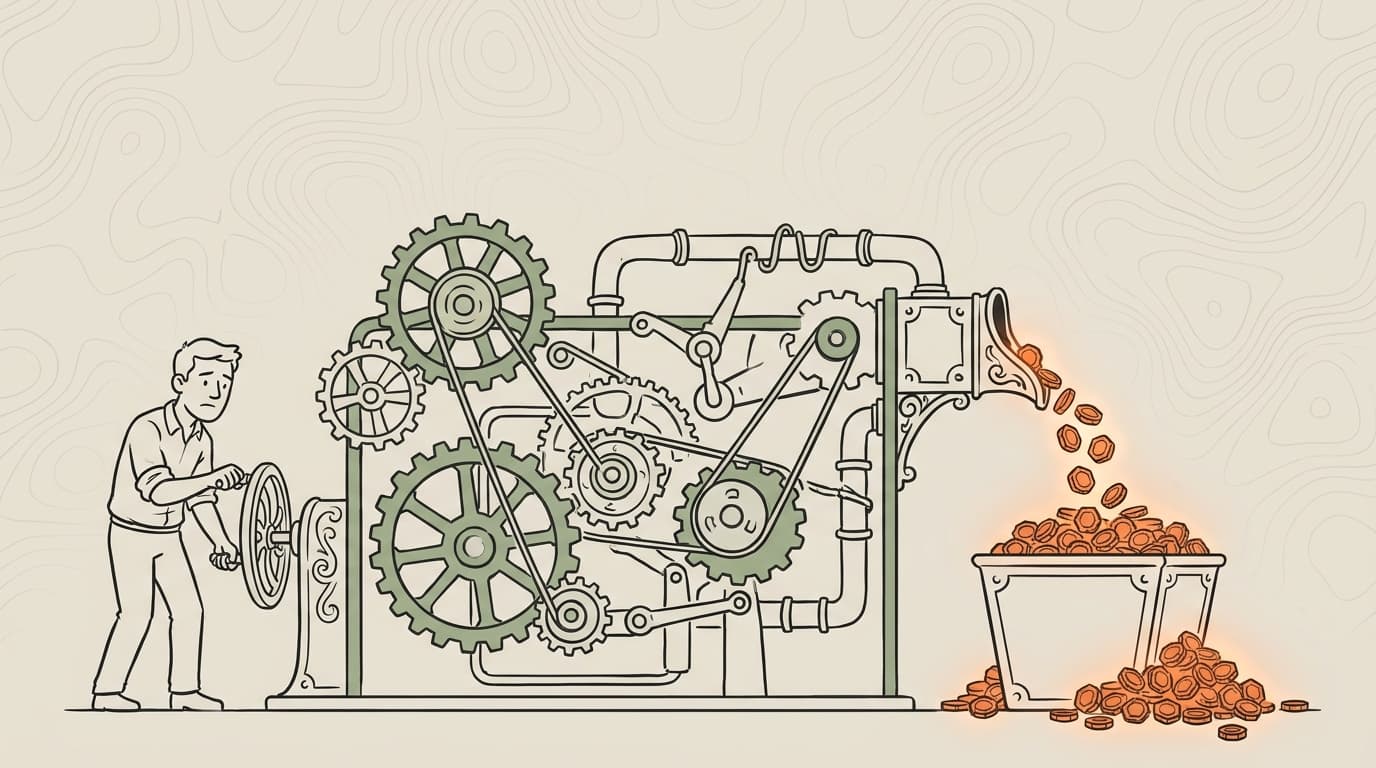
Nadella says human and token capital compound. Your org chart disagrees.
Satya says human and token capital compound. He doesn't say which humans. Your most senior people might be the ones the AI era selects against.
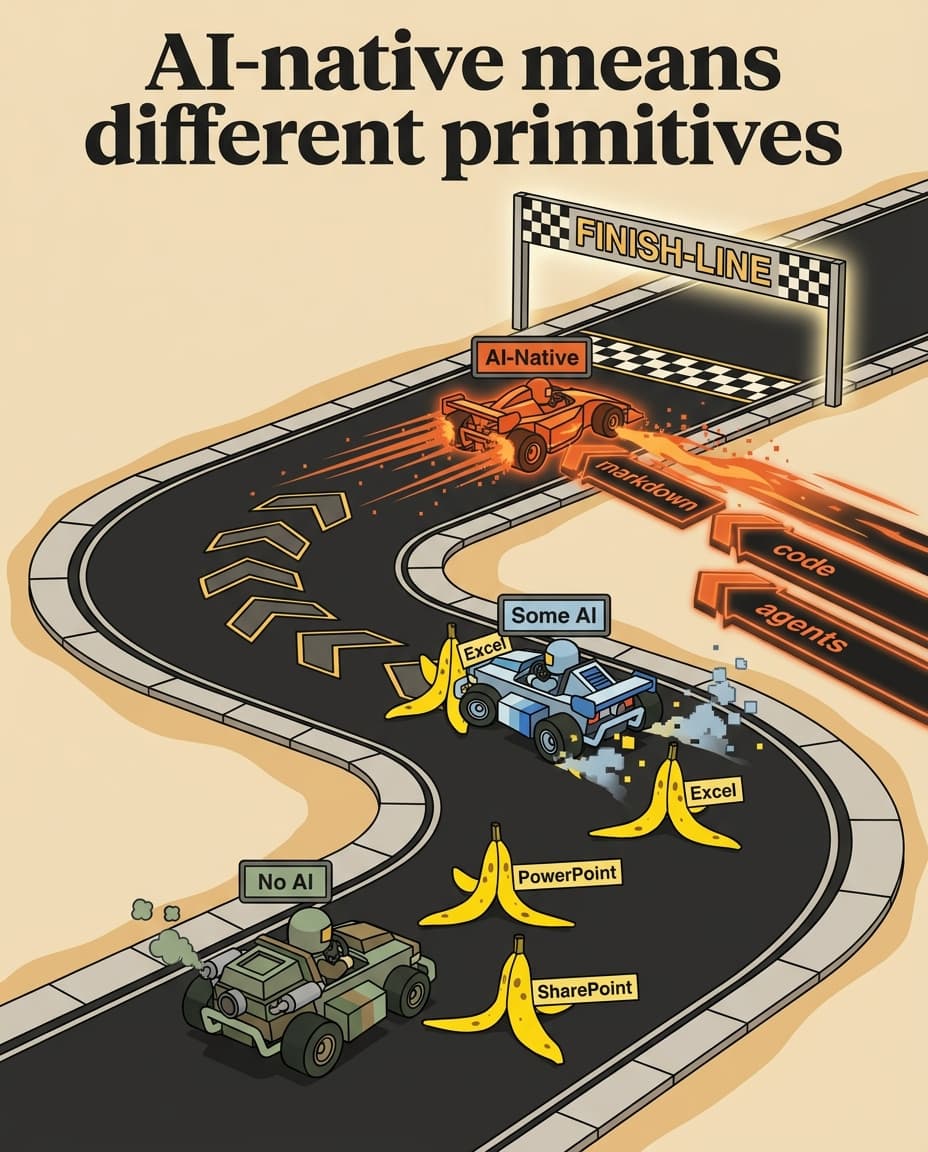
You adopted AI. Did the judgment come with it?
AI adoption isn't slow, it's jagged — and the jaggedness is producing new friction: speed against accountability, the entry rung getting cut, and the question of where judgment comes from next.